Introduction:
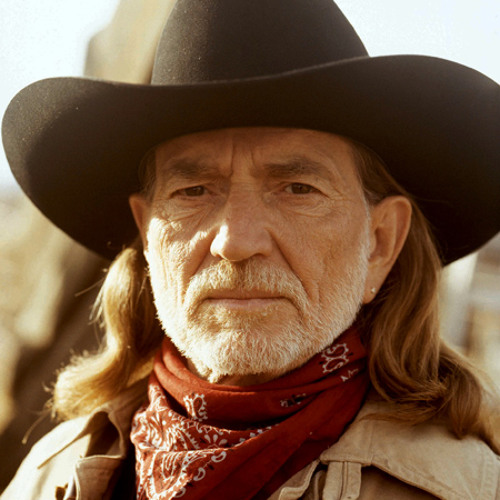
Willie Nelson’s Blue Eyes Crying in the Rain – A Quiet Masterpiece That Redefined Country Music
When Willie Nelson released Blue Eyes Crying in the Rain in 1975, it wasn’t just another single—it was the song that changed the course of his career and firmly established him as one of country music’s greatest storytellers. Decades later, the Official Video continues to remind audiences why this simple, aching ballad endures as one of the most powerful songs in American music.
Written by Fred Rose in the 1940s, the song had been recorded by several artists before Nelson, but it was his version on the album Red Headed Stranger that struck lightning. Unlike the heavily produced country tracks of the era, Nelson’s arrangement was stripped down—just his gentle voice, tender guitar, and a quiet sense of resignation. The result was hauntingly intimate, almost like a whispered confession rather than a performance.
The video enhances that intimacy, framing Nelson not as a polished star but as a wandering balladeer—his weathered voice and calm presence embodying the weary but enduring spirit of the song. Every line carries both loss and acceptance: “Love is like a dying ember, only memories remain.” Nelson doesn’t over-sing; instead, he allows silence and space to do the emotional heavy lifting.
Blue Eyes Crying in the Rain became Willie Nelson’s first No. 1 hit as a singer, and it won him a Grammy for Best Country Vocal Performance, Male. More importantly, it marked the beginning of the outlaw country movement’s mainstream breakthrough, proving that authenticity and simplicity could resonate more deeply than elaborate production.
For fans, the song is more than a classic—it is a touchstone of Nelson’s artistry. It captures what has always made him unique: the ability to tell the deepest human truths in the fewest possible words, with a delivery so unassuming that it feels like it was meant only for you.
Nearly 50 years later, Blue Eyes Crying in the Rain remains a defining moment in Willie Nelson’s career. It is not just a song of heartbreak—it is a song of memory, faith, and the beauty of simplicity. In both sound and vision, it continues to stand as one of the most moving pieces of country music ever recorded.