Watch the video at the end of this article.
Introduction
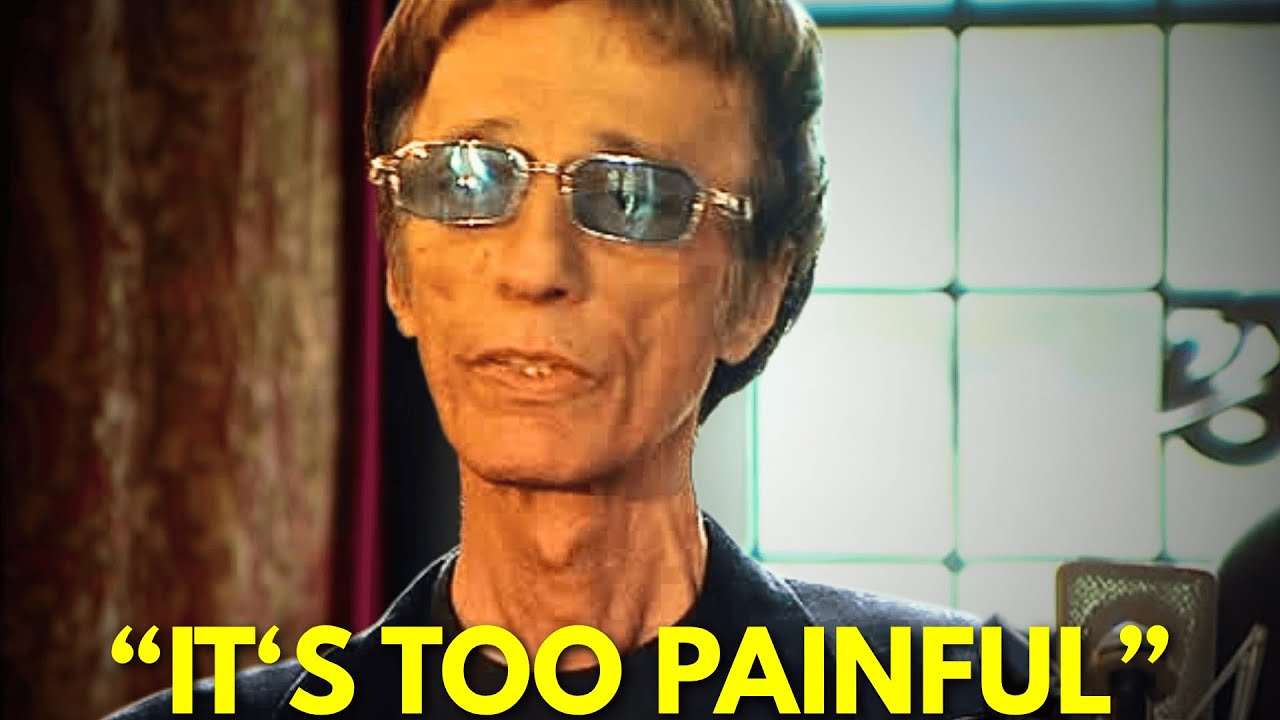
It was one of those rare moments in music history when a song became larger than the people who created it—not because of commercial success, but because of emotional tension inside the studio. The track at the center of it all was a composition tied closely to the creative identity of the Bee Gees, a group whose harmony was built not only on vocal precision but also on the fragile balance between three very different brothers. On that particular night, however, that balance fractured in a way no one present would forget. Robin Gibb, known for his haunting vibrato and deeply expressive delivery, made a decision that stunned the production team: he refused to sing the song as it had been written and arranged. For Robin, it was not simply a matter of preference—it was conviction. He reportedly felt the lyrical tone and emotional direction no longer reflected the truth he wanted to express, and he stepped back from the microphone, leaving a silence that felt heavier than any orchestration could fill. In contrast, Barry Gibb, the eldest brother and often the stabilizing force in the group, chose not to argue, not to push, and not to abandon the track. Instead, he stayed. What followed became an unplanned performance that would later be spoken about in studios and fan circles as one of the most emotionally charged recordings associated with the Bee Gees’ extended legacy. Barry decided to finish the song alone. With only the band and engineers present, he stepped into the booth and reinterpreted the entire piece in real time. Without Robin’s counter-harmony and without Maurice’s usual melodic grounding in certain sections, Barry carried both melody and emotional weight by himself. The arrangement, originally intended as a layered brotherly dialogue, transformed into something more solitary—almost confessional. Each line felt stretched thinner, more exposed, as if the absence of Robin’s voice had created a second, invisible instrument: silence. Those who were there later described the atmosphere as tense but respectful, as if everyone understood they were witnessing not a breakdown, but a transformation. Barry did not attempt to replicate what was missing. Instead, he adapted, adjusting phrasing and timing, allowing pauses to breathe where harmonies would normally have entered. In doing so, he turned what could have been an unfinished disagreement into a completed artistic statement. When the final note faded, there was no celebration—only quiet acknowledgment that something unusual had occurred. The recording would later circulate among collectors and fans as a symbol of the complex dynamic between the Gibb brothers: unity and divergence existing in the same breath. Over time, the story grew in myth, sometimes exaggerated, sometimes romanticized, but at its core it remained simple. One brother refused to sing because he could not stand behind the emotional truth of the song. Another brother refused to let the song die because he understood its importance in a broader creative journey. And in that contrast, the essence of their artistry became clear: the Bee Gees were never just about harmony—they were about the tension that makes harmony necessary in the first place.