Watch the video at the end of this article.
Introduction
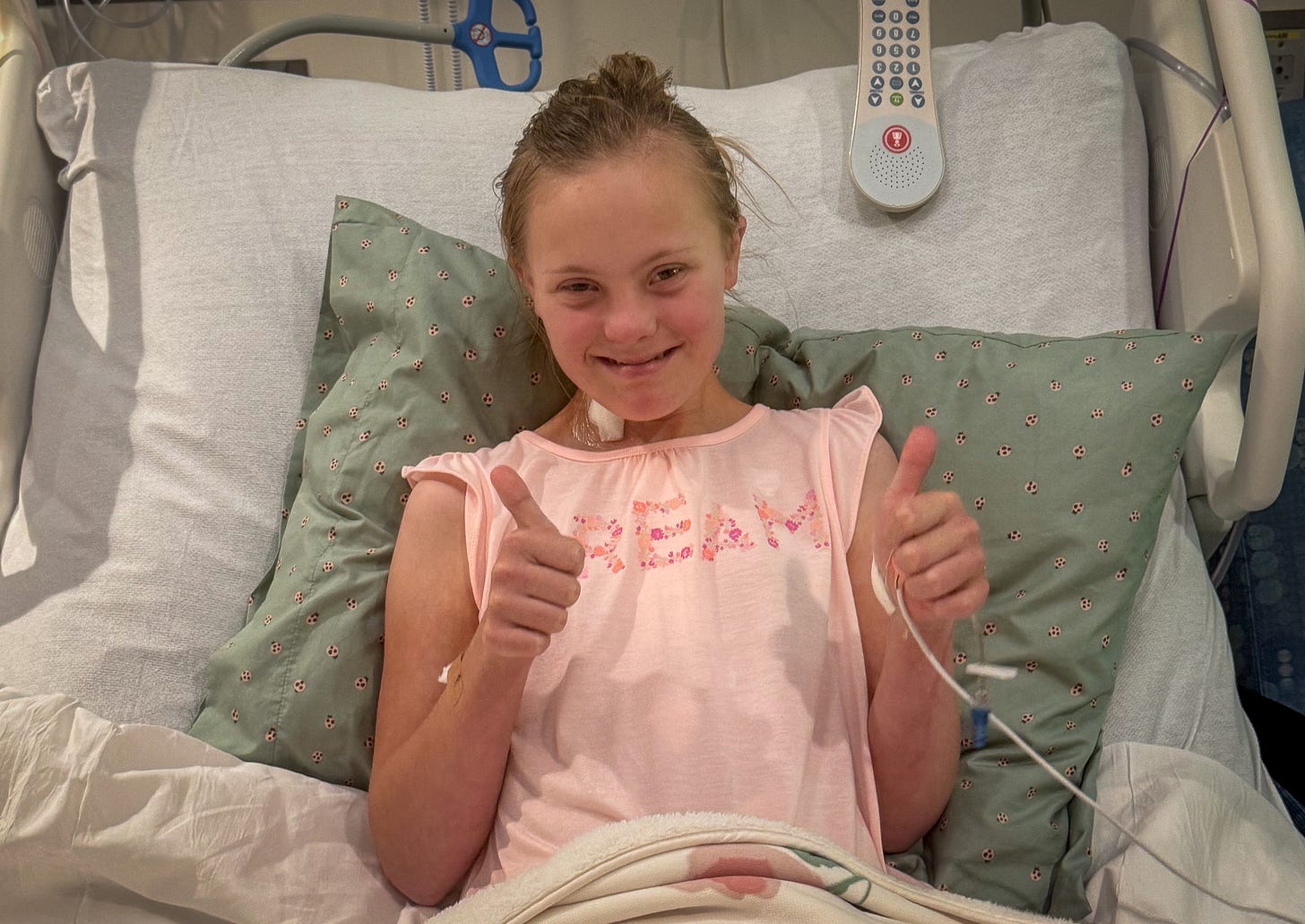
What happened over those days doesn’t read like a clean, dramatic “instant miracle” the way people sometimes expect faith stories to look. It felt slower, heavier, more human than that. Indiana had already expressed something very honest and very difficult for any parent to say out loud—she wanted a miracle, but she didn’t want surgery. That tension sat with the whole family, because those two things don’t always line up in the way we wish they would. When the decision finally came that surgery was necessary, there wasn’t relief in the simple sense. There was fear, waiting, and a kind of quiet surrender that only shows up when you’ve run out of ways to control the outcome yourself. In the days leading up to the operation, every small moment seemed to carry more weight than usual. Conversations felt shorter. Time felt stretched. Even hope felt like something you had to hold carefully, not something you could shout about. And yet, inside that pressure, something else was also happening—something harder to explain but impossible to ignore for the people living through it.
As the surgery approached, the family didn’t describe seeing an instant, supernatural healing in the exact moment before she was taken into the operating room. There was no sudden reversal that could be pointed to as proof in a clinical sense. But what they did feel—what they insist mattered just as much—was a steady sense that they were not walking into it alone. The language they use is careful, almost tender: not a single flash of intervention, but a buildup of strength, clarity, and peace that arrived in pieces over time. The operating room still happened. The medical reality still needed to be faced. But the emotional weight around it began to shift in ways they couldn’t fully explain.
After the surgery, instead of a simple “everything is fixed” story, what emerged was a deeper reflection. The idea of miracle, for them, wasn’t limited to a physical outcome written in perfect terms. It included survival. It included stability. It included the fact that fear did not have the final word. In that sense, they described the last few days as something that carried its own kind of healing, even if it didn’t look like what they originally hoped for. The phrase “God gave her both” becomes less about contradiction and more about perspective—wanting one outcome, receiving another path that still carries grace inside it.
Reading the full post on Rory’s Substack, “THIS LIFE I LIVE,” the emphasis isn’t on spectacle. It’s on presence. On the strange way families remember not just what happened medically, but what they felt spiritually while everything was unfolding. There’s grief mixed with gratitude, fear mixed with relief, and an awareness that not every answered prayer arrives in the form people first imagine. What stays behind is the sense that something carried them through those days—something quiet but steady enough to get them from one moment to the next without falling apart.
Video