Watch the video at the end of this article.
Introduction
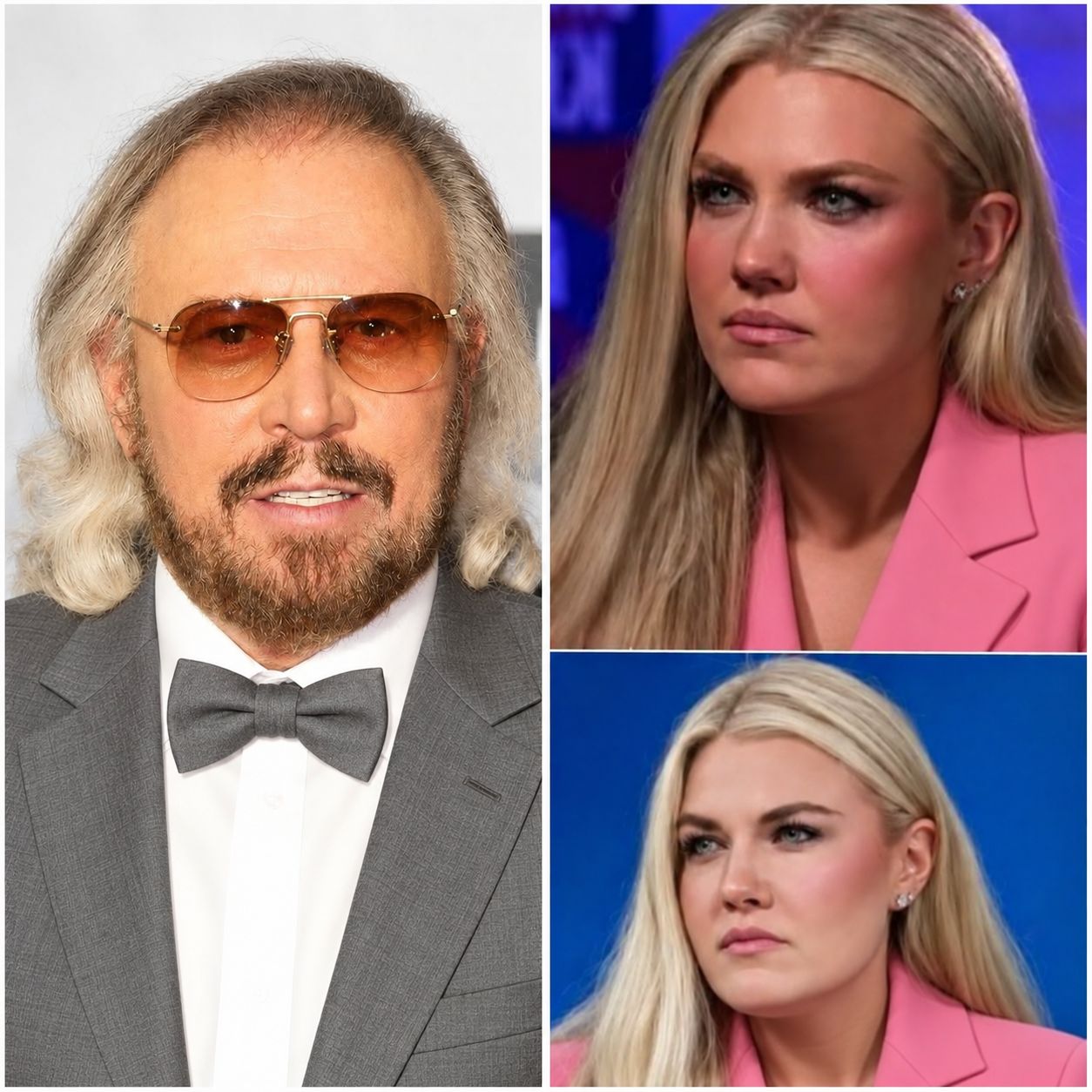
The room fell silent when Erika Kirk turned toward Barry Gibb and said, “Sit down, you 79-year-old country legend.” The remark was meant to end their exchange, but Barry did not raise his voice or leave the stage. He waited until the audience was quiet, then lifted his microphone.
“I’m not a country legend,” he said with a small smile. “But I have spent enough years making music to know that we don’t have to agree to listen to each other.”
A few people applauded. Others seemed unsure what to do. Barry continued, speaking slowly. He said that age had taught him many things, including how easy it was to say something sharp and how difficult it could be to take those words back. He would rather spend the evening talking about music, he said, than turn one uncomfortable moment into a fight.
Erika looked down for a moment. When she spoke again, her voice was softer. “That was unfair,” she said. “I’m sorry.” Barry nodded and thanked her. Then, instead of moving on as though nothing had happened, he asked what she had been trying to say before the exchange became heated.
They talked for several minutes. Their views did not suddenly become the same, and no one in the audience pretended that a single conversation could settle every disagreement. Yet people listened. When Barry spoke about performing for audiences across generations, Erika let him finish. When she explained her point, he gave her the same courtesy.
By the end, the strongest applause was not for a clever comeback. It came when the two shook hands. Barry then returned to the music, inviting the audience to join him in a song they knew by heart.
As voices rose around the room, the earlier remark seemed smaller than it had moments before. What people would remember from that fictional evening was Barry’s choice to answer an insult with patience—and Erika’s choice to apologize when she realized she had crossed a line.