Watch the video at the end of this article.
Introduction
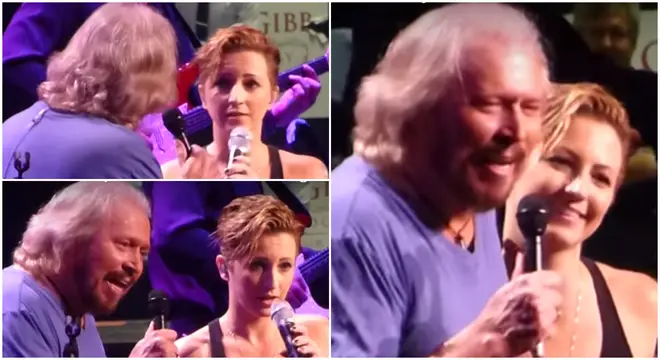
When Samantha Gibb stepped onto the stage beside her uncle Barry, the significance of the moment reached far beyond another concert appearance. Here were two generations of the same musical family, coming together through a song that could express what ordinary conversation often cannot. Their performance of “How Can You Mend a Broken Heart” offered a moving reminder that behind the Bee Gees’ extraordinary success was a family whose love endured through loss.
The duet took place at Philadelphia’s Wells Fargo Center on May 19, 2014. Samantha, the daughter of the late Maurice Gibb, joined Barry in a performance that connected their shared history with the music that had touched millions. Remembering her father while singing beside his brother gave the familiar ballad a deeply personal meaning.
What made the moment compelling was the relationship at its center. Barry was sharing the stage with his niece, and Samantha was bringing her own voice to a musical legacy her father had helped create. Heard in that context, the song’s question became more than a memorable title. It invited reflection on how people carry grief while continuing to love, work, and create.
There is something especially powerful about hearing a family’s music passed between generations. A recording preserves a voice from a particular moment, but a live performance allows that history to breathe again. Samantha’s presence offered a connection to Maurice without taking away from her identity as a singer. Beside Barry, she became part of an ongoing story.
For listeners who associate the Bee Gees with their own relationships, separations, and memories, such a duet can feel intensely personal. Its emotional force comes from the meeting of public music and private experience: a song known around the world, sung by relatives with their own reasons to cherish it.
Ultimately, this was a tribute to Maurice and to the family bond Barry and Samantha continued to share. It showed how a familiar melody can hold both sorrow and affection. No performance can undo a loss, but music can give remembrance a living form—and allow the people left behind to keep singing together.